
Working at Height Regulations: What the Law Says and What You Must Do
Falls from height remain the single biggest cause of workplace deaths in the UK. In 2024 and 2025 alone, 35 people lost their lives after a fall, which is more than a quarter of all worker fatalities. The hardest part to accept is that almost none of it was down to bad luck. Falls happen because a job was rushed, the wrong equipment was used, or someone had never been shown how to do the work safely.
That is exactly why the working at height regulations exist, and why they are worth understanding properly. This guide explains what the law asks of you, walks you through the hierarchy of control in plain terms, and sets out the equipment, inspections and training that keep your team safe and your business compliant.
What Counts as Working at Height?
It is tempting to think this only applies to scaffolders and roofers, but the law casts a much wider net. Under the Work at Height Regulations 2005, working at height means any work in any place where a person could fall a distance liable to cause injury. There is no minimum height threshold, so a short drop can count just as much as a tall one, because even a low fall can do real harm.
In practice, that covers far more everyday tasks than most people expect:
- Ladders and stepladders
- Scaffolding and towers
- Flat roofs and pitched roofs
- Cherry pickers and mobile elevating work platforms (MEWPs)
- Working near fragile surfaces such as skylights
- Working next to excavations or open manholes
- Mezzanine floors and raised platforms
The simplest test is this. If there is a risk of falling and getting hurt, it counts as working at height, even if someone is only standing on a chair, which is never a good idea.
What the Working at Height Regulations Say
The Work at Height Regulations 2005, updated in 2007, place clear legal duties on everyone who plans, manages or carries out this kind of work. That includes you as an employer, anyone who is self-employed, and anyone who controls a workplace where work at height happens, such as a building owner. The whole point of the regulations is simple. Prevent falls by putting sensible controls in place before anyone leaves the ground.
Sitting alongside them, the Management of Health and Safety at Work Regulations 1999 require you to assess the significant risks in your workplace under Regulation 3, and work at height is exactly that kind of risk. Where the work cannot be avoided, it needs to be properly planned, with a suitable risk assessment carried out first.
Who is responsible?
Responsibility is shared, so it helps to be clear on who does what:
- Employers must make sure the work is properly planned, supervised and carried out by competent people
- Self-employed people carry the same duties as employers, protecting both themselves and anyone else affected by their work
- Building owners and controllers must make sure work at height on their premises can be done safely
- Employees must follow their training and use the equipment provided correctly
The penalties for getting it wrong
Getting this wrong carries real consequences. The HSE can issue a prohibition notice that stops the work on the spot until the risks are under control, charge you under Fees for Intervention, and pursue prosecution with unlimited fines or, in the most serious cases, imprisonment. Planning the work properly from the outset is always cheaper, and far less stressful, than being caught out during an inspection.
Sue recommends treating any refurbishment or maintenance job as work at height from the very start. The HSE pays close attention to how this work is planned, so a written plan and risk assessment are your best protection long before a single ladder goes up.
The Hierarchy of Control
The law does not let you reach for whatever is cheapest or quickest. Instead, it sets out an order of controls that you must work through from the top down, only moving to the next option when the one above genuinely is not reasonably practicable. The reason is straightforward. The measures near the top protect everyone and take the decision out of the hands of any one person, so they are far more reliable than trusting an individual to get it right every time. Here is how the order works in practice.
1. Avoid work at height
The first question is always whether the job can be done from the ground, because that removes the risk of a fall completely. Often it can, with a bit of thought. You might inspect from below using a camera or drone, reach up with a long-handled tool such as an extendable duster or a roller on a pole, or bring the work down to you, for example by taking a light fitting down to work on at ground level. It also helps to prepare as much as possible on the ground, like bolting pipework together before it goes up or choosing the right drill bit before you climb. If the work does not need to happen at height, the law says keep it on the ground.
2. Prevent falls
When work at height is unavoidable, the next step is equipment that stops a fall from happening at all. This is collective protection, because it guards everyone on site rather than one individual, which is why it sits so high up the list. Depending on the job, that might mean:
- Properly erected scaffolding with guardrails, for example along the facade of a building
- Mobile elevating work platforms (MEWPs) with guardrails
- Fixed working platforms with edge protection
- Podium steps and individual scaffold podiums with guardrails
- Handrails along the open edge of a roof
You do not always need a full scaffold either. A scaffold podium, or a cherry picker chosen to suit the ground and surroundings, can do the job just as safely.
3. Minimise the distance and consequences
Some work leaves a residual risk of falling no matter how well you plan it. Here your job is to reduce both how far someone could fall and how badly they could be hurt, which is often called fall arrest. Airbags, crash mats and soft-landing systems soften the impact, and are commonly drawn up alongside open-back delivery wagons where people stand on the flatbed to unload. Safety nets do a similar job, but only if a competent company installs and tensions them correctly, otherwise they sag under load. If anyone does fall into a net, its tension must be checked again before it is trusted.
4. Last resort: personal fall protection
Personal fall protection, such as a harness and lanyard, sits right at the bottom because it protects only the individual and depends entirely on being used correctly. If it is the only option left, there are a few things you simply have to get right:
- The harness must be a full body harness. A waist or climbing harness will not keep a worker upright after a fall
- The worker must be trained to use the equipment, and a rescue procedure must be in place. Someone left hanging in a harness can be harmed as their circulation is affected, so they need to be brought down quickly
- The lanyard must be the right length. Too long and it will not arrest the fall before the worker hits the ground, too short and it restricts movement
- The lanyard must be clipped to a solid anchor point rated for the weight and impact of a fall. If the load rating is unknown, the anchor should be pull-out tested and its rating confirmed
Whichever control you land on, the same rule applies. Brief your team, make sure they are trained on that exact system, and supervise the work properly. It only takes one person walking past a bad practice unchallenged to undo all your careful planning.
Sue recommends never handing someone a harness without a rescue plan to match. A harness will stop the fall, but a worker left hanging can be seriously harmed within minutes, so your team must know how to reach them and bring them down quickly and safely.
Why the order matters
One last point on the hierarchy, and it is an important one. You are legally required to work down it in order and to record why any higher-level control could not reasonably be used. That written reasoning is exactly the kind of evidence an inspector will want to see, so it is well worth keeping alongside your risk assessment.
The Legal Requirements for Common Equipment
Whatever you use, it has to be in good condition, suitable for the task and used the right way. Different equipment comes with different legal requirements, so here is what to watch for with the most common types.
Ladders and stepladders
Because ladders are so familiar, they are also the most misused. To stay on the right side of the law, they should:
- Only be used for low-risk, short-duration work, generally under 30 minutes
- Be set on firm, level ground
- Be secured at the top or footed at the base
- Maintain three points of contact at all times
- Extend one metre above the landing point
- Be inspected regularly
Mobile access towers
A tower is often a safer choice than a ladder, as long as it is set up and used correctly:
- The tower must be erected by a trained, competent person
- The working platform must have guardrails
- The wheel brakes must be applied while it is in use
- The tower must never be moved while someone is on it
- Outriggers must be fitted where the manufacturer specifies
MEWPs (cherry pickers)
Mobile elevating work platforms carry a higher fall risk, so the rules around them are tighter:
- Operators must hold a valid IPAF or PASMA certificate
- Daily pre-use inspections must be carried out and recorded
- Guardrails must be in place while in use
- Ground conditions must be assessed before use
- Personal fall protection may be required where the manufacturer specifies
Scaffolding
Scaffolding carries the highest risk of all and must be designed, erected and maintained by trained scaffolders. The legal essentials include:
- A handover certificate provided before it is first used
- Guardrails installed at open edges
- Toe boards fitted to stop objects falling from height
- Inspections at least every seven days and after adverse weather
- Warning tags used to identify incomplete or unsafe sections
Sue recommends treating ladders as short-duration tools only, ideally for jobs under 30 minutes, on firm level ground with three points of contact at all times. A surprising number of falls happen during quick tasks that felt too small to bother planning.
Risks You Must Avoid
Most serious falls come down to a shortcut taken for convenience. A few saved minutes are never worth it, and telling yourself it will never happen to you offers no protection at all. These are the risks to design out of your workplace:
- Standing on office chairs or desks, which offer no stability or protection
- Overreaching from ladders. A simple rule is to keep your belt buckle within the ladder stiles
- Removing guardrails, even briefly, without alternative protection in place
- Using damaged equipment. Take it out of service straight away
- Skipping inspections, which are a legal requirement
- Inadequate training
- Working with no rescue plan
- Ignoring the weather, as strong winds make work at height unsafe
- Taking shortcuts, because there is no room for just this once when working at height
Worth remembering too, most fatal falls involve experienced workers taking a risk they knew they should not. Confidence is no substitute for the right controls.
Inspection and Maintenance
Equipment only stays safe if it is checked and looked after, and the law expects that on a regular basis.
Before each use
A quick visual check for damage, and a look to confirm everything is present and working, should become second nature before anyone starts.
Formal inspections
On top of that, inspections are needed at set intervals:
- Ladders: every three to six months by a competent person
- Scaffolding: every seven days and after weather events
- MEWPs: daily pre-use checks plus periodic thorough examination
- Harnesses and lanyards: every six months by a competent person
Keeping records
Good paperwork matters as much as the checks themselves:
- Keep inspection records for the life of the equipment plus two years
- Make records available to inspectors on request
- Tag defective equipment and remove it from service immediately
Where Training Fits In
Training is how you prove competence, and competence is what the law actually asks for. Being keen or experienced is not enough on its own. Anyone working at height needs to be able to show they understand the risks, can use the equipment properly, and know how to put the right controls in place. That usually breaks down into three types:
- General awareness training, giving anyone who may work at height a solid grounding in the risks, the hierarchy of control and when to report concerns
- Equipment-specific training, such as ladder safety, PASMA for towers, IPAF for MEWPs, and harness and fall arrest training
- Supervisor training, for anyone who plans, manages or oversees work at height, covering planning, risk assessment, inspection requirements and emergency procedures
Envesca Working at Height Training
Proper training proves your compliance and, more importantly, makes sure your people are genuinely competent. Envesca offers options to suit different risk levels and working environments. The Working at Height Awareness eLearning course suits staff who need a solid understanding of the risks, legal duties and safe practices, covering an introduction to working at height, employer responsibilities, planning the work, the risk assessment steps, reducing and controlling the risks, and using ladders and stepladders safely. For a more hands-on option, our half-day Working at Height course can be delivered at your workplace, at another venue, or virtually via Zoom for up to 12 people.
Do Not Fall for Bad Practice
It comes down to this. Falls kill and injure workers every year, and the law gives you a clear, proven way to keep those numbers as low as possible. Avoid work at height wherever you can, prevent falls with the right equipment where you cannot, and minimise the consequences when a risk still remains. For the official detail you can read the HSE guidance on the law and the HSE brief guide. But this was never really about avoiding fines. It is about every member of your team going home safe at the end of the day.
Envesca has helped businesses across the South West stay safe and compliant since 1996. Take a look at our health and safety training or get in touch to talk through the right working at height training for your team.
7 Secrets to Risk Assessment
Free
Resources &
Downloads
Informative. Useful. Practical.
Here at Envesca we believe that we are good at giving proactive, sensible and useful advice. Below you will find some free resources that you can download on a host of subjects that will help you and your business.
Envesca offer a number of different training courses, which offer advice and guidance on these topics.
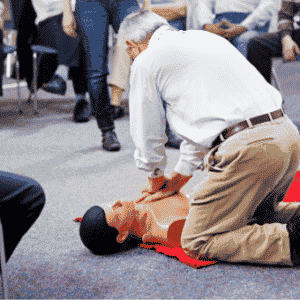
Qualsafe Level 3 Award in First Aid at Work
A practical three-day First Aid at Work course that prepares you to respond confidently to a wide range of injuries, illnesses and workplace emergencies, with the skills to provide effective first aid until further help arrives. Learn More
Qualsafe Level 3 Award in First Aid at Work Annual Refresher
This half-day First Aid at Work Annual Refresher course gives qualified first aiders the opportunity to refresh their knowledge, practise essential first aid skills and maintain confidence in responding to a workplace emergency. Learn More
Legionella Risk Management for Responsible Person
Our one-day Legionella Management for the Responsible Person course helps you understand your legal responsibilities, manage legionella risks and protect people from Legionnaires' disease. Learn More


