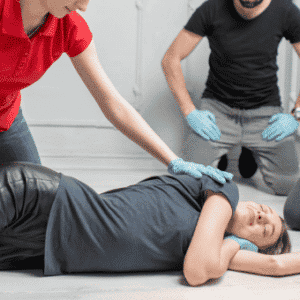
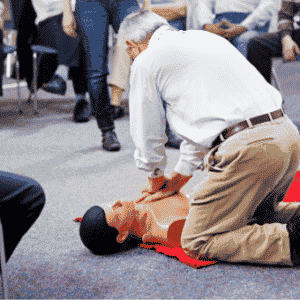
Emergency First Aid At Work is one of the most valuable courses you and your team can take, and knowing how to give CPR and use a defibrillator sits right at the heart of it. In the moments before an ambulance arrives, a confident first aider can be the difference between a good outcome and a tragic one. This guide walks you through what the course covers, what it costs, how many first aiders you need and the life-saving skills you will come away with. If you are weighing up a provider, we are here to answer every question you have.
First Aid At Work: What Are The Requirements?
UK health and safety regulations describe first aid as either the treatment you give to preserve someone’s life until a medical professional arrives or the treatment of minor injuries. When an incident or illness is time-critical, that early help can be the difference between life and death.
Every business has a legal duty to provide adequate first aid equipment and to train enough staff, and how many you need depends on the risks in your workplace. The more hazards you have, the more trained first aiders you will need.
There are three first aid qualifications you can take to respond to medical situations at work: First Aid At Work (FAW), Emergency First Aid At Work (EFAW) and Paediatric First Aid (PAE).
What Is Emergency First Aid At Work?
Emergency First Aid At Work is an accredited, one-day course that gives you the skills to respond quickly, confidently and competently to a medical emergency, and to keep the person going until an ambulance arrives. Envesca runs it as the Qualsafe Level 3 Award in Emergency First Aid at Work.
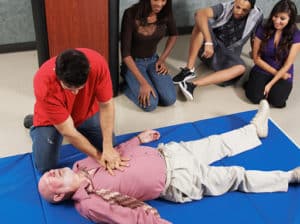
It is hands-on from the start. You will get stuck into practical demonstrations and role-play, practise on a mannequin and have plenty of time to ask questions. Once qualified, emergency first aiders need to requalify every three years to stay competent and compliant, and we recommend a short refresher every year in between.
Sue recommendsDo not wait three years for your requalification to come round. A short annual refresher keeps your first aiders sharp and, just as importantly, keeps their confidence up. Emergencies never happen on a convenient schedule, and it is that practised muscle memory that pays off when the pressure is on.
What Does Emergency First Aid At Work Cover?
Wondering what kinds of incidents your first aiders will be ready for? Over your one-day EFAW course, you will cover:
- Undertaking risk assessments.
- Understanding the role of the first aider, including cross-infection prevention, recording incidents and the equipment available to you.
- Assessing a situation so you can respond quickly, safely and competently in an emergency.
- Giving first aid to an unconscious casualty, which also covers seizures.
- Performing CPR and using an automated external defibrillator.
- Helping someone who is choking.
- Treating and controlling bleeding wounds.
- Managing shock.
- Treating minor injuries such as small cuts and grazes, minor burns and splinters.
CPR And AED: The Life-Saving Heart Of The Course
Emergencies do not keep office hours. Whether you are at work, at home or out and about, having the skills and the confidence to step in can be the difference between a positive outcome and a tragic one. That is exactly why CPR and AED training sit at the centre of the Emergency First Aid At Work course. You will learn to perform Cardiopulmonary Resuscitation (CPR) and to use an Automated External Defibrillator (AED), so you will leave ready to act as a vital link in what is often called the chain of survival.
What CPR Training Covers
CPR is one of the most important skills in the course. It is the intervention that matters most when someone is unresponsive or not breathing normally. You will learn to assess the situation quickly, give effective chest compressions and deliver rescue breaths. Together, these keep blood and oxygen moving to the brain, buying vital time and improving the chances of survival until professional help arrives.
The session also covers calm communication and casualty care, so you can keep a clear head and look after the person while you wait for the ambulance. You will practise handling chest pains and treating an unresponsive casualty, and the training includes Basic Life Support and adult resuscitation. Throughout, you get hands-on practice with feedback from professional instructors, so you can refine your technique and leave genuinely confident rather than just informed.
How AED Training Strengthens Your Response
Adding AED skills to your first aid toolkit is like bringing the right tool to the moment it matters most. When every second counts, knowing how to use a defibrillator can change the outcome completely.
The training builds your confidence because once you understand how an AED works and the simple steps to follow, you are far more likely to act quickly and decisively. Modern AEDs are designed to be straightforward and user-friendly, guiding even an inexperienced user through the process, so almost anyone can help save a life. And because you learn to give CPR and then move smoothly to the AED, you are ready to deliver a complete, joined-up response rather than a partial one.
Why CPR Matters So Much
When someone goes into cardiac arrest, their heart stops pumping effectively, and blood flow stops with it, which can lead to brain damage or death within minutes if nothing is done. Starting CPR promptly keeps blood moving to the vital organs and bridges the gap until the professionals arrive. Think of it as the lifeline that keeps oxygenated blood circulating in those critical first moments. Quick, competent CPR can double, and even triple, a person’s chance of survival, which is exactly why it sits at the core of good emergency first aid.
How CPR And AED Together Improve Survival Rates
Time is everything in a cardiac arrest. CPR is your first line of defence, keeping blood and oxygen flowing to the brain and organs and dramatically improving the odds when it is started early. On its own, though, it is not always enough, especially when the heart’s rhythm needs resetting. That is where an AED becomes a game changer, delivering a controlled electric shock to help restore a normal heartbeat, and it works best in the first few minutes. Combine the two and the odds of survival can jump from less than 10 per cent to over 50 per cent, according to medical studies. Familiarity with an AED takes away the hesitation and saves those precious seconds.
Sue recommends An AED is far less daunting than most people imagine. It talks you through every step and will not deliver a shock unless one is genuinely needed. So my advice is simple: the moment you start CPR, send someone to fetch the nearest defibrillator. Used together, CPR and an AED give a person the very best possible chance.
What To Expect From Emergency First Aid At Work Training
Accidents are preventable, but they still happen, so training your team in emergency first aid means a medical emergency can be handled quickly and calmly rather than in a panic.
The course is engaging and refreshingly hands-on. Alongside clear teaching and plenty of questions and answers, your trainer gives interactive demonstrations, and you get stuck into role-play scenarios based on your own workplace. You will learn each technique and then practise it, both with the group and on training dummies, with the trainer assessing you as you go through the one-day course.
To qualify, you must pass two assessments. The theory assessment is a set of multiple-choice questions, and the practical assessment asks you to demonstrate your new skills, including CPR and how to respond calmly and effectively to someone who is choking.
How Long Does An Emergency First Aid At Work Course Last?
The one-day course is valid for three years. It is worth renewing your qualification before it expires, because once a certificate lapses, you are no longer considered competent to act as a workplace first aider.
How Many People Can We Train At Once?
We cap each course at 12 people, so everyone gets plenty of hands-on practice.
How Many First Aiders Do I Need?
This is one of the questions we are asked most, and there is no quick answer. There are no hard and fast rules on exactly how many first aiders a business should have. Instead, you carry out a first-aid needs assessment, which weighs up all the circumstances of your particular workplace and helps you land on the right number. The HSE website has helpful guidance to get you started.
Sue recommends Start with a first-aid needs assessment before you book anyone on. How many first aiders you need comes down to your risks, your headcount, your shift patterns and how spread out your premises are. Get the assessment right first, and every training decision after it becomes much easier.
The Role Of A First Aider At Work
Anyone who completes a certified first aid course takes responsibility for looking after colleagues who fall ill or are injured at work. The training gives them the knowledge, skills, confidence and competence to take on duties such as:
- Keeping first aid kits and facilities stocked and well maintained.
- Assessing anyone who is injured or unwell.
- Taking charge when someone needs medical attention.
- Using first aid supplies and equipment safely to give appropriate care until the emergency services arrive.
- Recording the incident properly, in line with your company’s procedures.
How Emergency First Aid At Work Differs From Other First Aid Courses
EFAW works well alongside other courses if you want a broader qualification. Here is how the main ones compare.
First Aid At Work
First Aid At Work is a three-day course, more in-depth than EFAW, designed to prepare delegates for a wide range of situations rather than emergencies alone. You can read more about the Qualsafe Level 3 Award in First Aid at Work and what it involves.
Paediatric First Aid
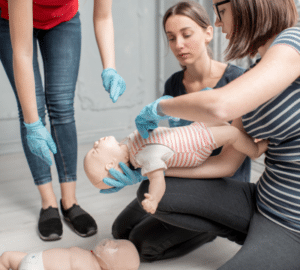
This two-day course is built around the Department for Education’s Early Years Foundation Stage (EYFS) Statutory Framework. It gives you the skills to handle a range of paediatric situations, from assessing an emergency and helping an unresponsive child to CPR, choking, meningitis and asthma. You will find the details on our first aid training pages.
Combined Emergency First Aid And Emergency Paediatric First Aid
Sometimes it makes sense for staff to dual-qualify in less time. Our one-day combined course covers both emergency adult and emergency paediatric first aid, which saves you time and money when training support staff. It is ideal for anyone working with and around children. The EYFS requires a two-day course for those in sole charge of infants and children, but support staff and helpers are well served by this combined option.
Mental Health First Aid
Mental health matters just as much as physical health. This two-day course builds your confidence and knowledge so you can spot the signs of a mental health problem at work, respond calmly in a crisis and point someone towards the right support. Read more about our Mental Health First Aid training.
How Much Does An Emergency First Aid At Work Course Cost?
If you join a public classroom course, the cost ranges from £77.00 plus VAT to £140.00 plus VAT per person, once the available discounts are taken into account. Book an in-house course for 12 candidates and it drops to around £65.00 plus VAT per person, which usually works out cheaper per person for a full team.
Emergency First Aid At Work Can Save Lives
First aid skills matter in every workplace, but emergency first aid is the kind that can be the difference between life and death. The CPR and AED skills at the heart of this course give you not just the knowledge but the confidence to act decisively, making you a vital link in the chain of survival. What you take away goes beyond technique. It is a mindset that values being prepared and stepping in when it counts.
Envesca runs regular public classroom courses, so it is simple to get your team trained and keep everyone safe at work. We can also come to you and deliver the course at your premises on a date and time that suits you.
Ready to give your team life-saving skills? Book onto the Emergency First Aid At Work course, or have a chat with our super friendly team on 01452 502113 or at help@envesca.co.uk. They will be delighted to help.