
Accidents and medical emergencies can happen in any workplace, whether you run a quiet office, a busy café or a working warehouse. The benefits of first aid training reach far beyond ticking a compliance box. It is one of the most practical ways to protect your people, meet your legal duties and build a calmer, more confident team. This guide explains what first aid training covers, what the law expects of you, the real benefits it brings to your business, and how to get started with a provider you can trust.
What First Aid Training Covers
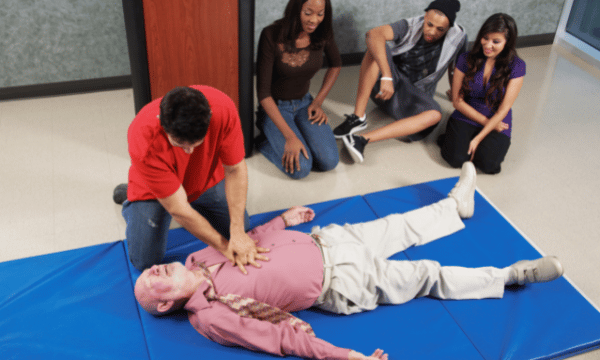
First aid training gives your staff the skills and confidence to respond to a medical emergency before professional help arrives. It teaches people how to manage everything from a minor injury to a serious, life threatening incident, and it is far more practical and hands on than many employers expect.
A good workplace course usually covers:
- Basic life support, including CPR
- Managing bleeding, burns, fractures and shock
- Helping someone who is choking
- Using an automated external defibrillator (AED)
- Recognising and responding to heart attacks, strokes and seizures
- Caring for someone who is unconscious or unresponsive
Your first aiders are not expected to be healthcare professionals. Their job is to take prompt, sensible action that can stop a situation getting worse, help someone recover more quickly, and in the most serious cases, save a life.
Your Legal Responsibilities as an Employer
As an employer, the law places the duty of care firmly with you. You already juggle a huge range of demands, from onboarding new starters to covering illness and keeping everyone informed, and first aid provision is part of that picture. Under the Health and Safety (First-Aid) Regulations 1981, every business in the UK must make adequate and appropriate first aid provision, so that anyone who is injured or taken ill at work gets help straight away.
In practice, you are expected to:
- Carry out a first aid needs assessment for your workplace
- Appoint and train enough first aiders for your level of risk
- Provide suitable first aid equipment and facilities
- Tell your staff who the first aiders are and where to find the kit
There is no fixed ratio of first aiders to employees. The right number depends on your level of risk, the size of your team, your shift patterns and the kind of work you do. The HSE sets out how to work this out, and you can read the detail on the official HSE first aid legislation page (opens in a new tab). Falling short can lead to enforcement action, fines and reputational damage, so it is worth getting right. As an approved training centre, Envesca delivers accredited, tailored first aid courses that help you meet these duties with confidence.
Sue recommends starting with a simple first aid needs assessment before you book anything. Once you know your real risks, shift cover and team size, choosing the right course and the right number of first aiders becomes far easier.
No Workplace Is Truly Risk Free
It is easy to assume that some workplaces carry little or no risk. A construction site has obvious hazards, from working at height to falling objects, but an office can feel perfectly safe by comparison. In reality, every workplace carries some risk, and a fall, an allergic reaction or a cardiac arrest can happen anywhere.
Poor standards do not just risk fines and enforcement. They also leave staff feeling that their employer does not really care about them. Most accidents can be avoided with sensible controls, but when something does go wrong, it is the people on the spot who make the difference. Having trained first aiders on hand means someone always knows what to do, and how to do it calmly.
The Benefits of First Aid Training for Your Business
Training your team in first aid does far more than tick a compliance box. It creates a safer, more prepared and more confident workplace, and the benefits are felt every day, not just in an emergency.
Lives can be saved
Whether it is knowing how to treat a small cut or when to dial 999, quick and correct action can prevent or reduce serious harm. In a cardiac arrest or a choking incident the first few minutes matter most, and a trained first aider can give critical care before paramedics arrive, which can dramatically improve someone’s chances.
Injuries are treated straight away
Prompt first aid reduces the severity of many injuries. Cooling a burn quickly limits the damage, supporting a sprain or fracture prevents further harm, and cleaning and covering a wound lowers the risk of infection.
Less absence and disruption
Quick, correct treatment can speed up recovery and cut the number of days lost to injury. In smaller teams, where every person counts, that resilience really matters.
More confident staff
Trained employees are confident employees. In a crisis some people freeze while others stay calm. Staff who are unsure of their skills often hold back, while those who are properly trained are far more likely to keep a cool head, remember what to do and act. The sooner that action comes, the less likely an injury is to worsen.
Better morale and a stronger culture
Offering first aid training sends a clear message that you value your people. Teams that feel looked after tend to feel more secure and more loyal, which supports morale and staff retention. The skills travel home with them too, so your team is better prepared to help family and friends, and the training days themselves make a genuinely useful team-building exercise.
A stronger reputation
Customers, clients and visitors trust businesses that take safety seriously. Being ready for a medical emergency shows real professionalism and care.
Smarter risk and insurance management
Workplaces with trained first aiders are often viewed more favourably by insurers, and a quick, appropriate response can reduce the risk of a claim or legal liability further down the line.
Who Should Be Trained?
As a minimum, every business should have at least one trained first aider on duty at all times. Larger teams, and those in higher risk industries, will need more. It is worth considering training for:
- Managers and supervisors
- Front of house staff and receptionists
- Anyone working in kitchens, workshops or on site
- Lone workers and those in remote locations
- Staff who deal with the public regularly
Even in a low risk setting, having more than one trained person adds valuable peace of mind and cover.
Sue recommends training more than one first aider wherever you can. Holidays, sickness and shift patterns can quickly leave you without cover, and a second trained person keeps you protected all year round.
Choosing the Right First Aid Course
The right course depends on your risk assessment and your industry. At Envesca, training is tailored to your business and delivered by experienced trainers who understand real workplaces. Our Level 3 Emergency First Aid at Work (EFAW) course suits lower risk settings such as offices and shops, while the three day Level 3 First Aid at Work (FAW) course goes further for medium to higher risk workplaces. If your staff work with children, Level 3 Paediatric First Aid focuses on child specific emergencies, and Mental Health First Aid helps your team spot the early signs that a colleague is struggling and offer the right support.
| Course | Format | Best suited to |
|---|---|---|
| Emergency First Aid at Work (EFAW) | One day | Lower risk settings such as offices, shops and small teams |
| First Aid at Work (FAW) | Three days | Medium to higher risk workplaces such as warehouses and manufacturing |
| Paediatric First Aid | Tailored | Anyone working with children, from nurseries and schools to clubs and childcare |
| Mental Health First Aid | Tailored | Teams who want to spot and support colleagues who are struggling with their wellbeing |
You can see the full range on our first aid training page. Every course is practical and hands on, with real life scenarios and trainers who take the time to understand your setting. The workplace courses are nationally recognised Level 3 qualifications, accredited by Qualsafe Awards (opens in a new tab). First aid certificates are valid for three years, with an annual refresher recommended to keep skills sharp.
Sue recommends putting your certificate expiry dates in the diary as soon as training is booked, and arranging the refresher before the three years are up, so your cover never lapses.
How to Get Started with First Aid Training
Getting first aid ready does not need to be complicated. These five steps keep it simple:
- Carry out a first aid risk assessment. Look at your hazards, team size, shift cover and any past incidents to work out how many first aiders you need and at what level.
- Choose a trusted provider. Look for HSE recognised courses, tailored content, friendly trainers and flexible delivery, whether on site, in a public classroom or through blended learning.
- Schedule the training. Pick dates that cause the least disruption. Envesca offers flexible scheduling for small teams and large organisations alike.
- Inform and empower your staff. Let everyone know who the first aiders are, display their names clearly, and include the detail in onboarding and your health and safety records.
- Keep your records up to date. Track certificate dates, plan refreshers, and review your first aid needs at least once a year or after any big change to your team.
When Every Second Counts
A short example shows why this matters. A small café owner completed Emergency First Aid at Work training with Envesca. A fortnight later, a customer collapsed with a suspected cardiac arrest. The trained staff member gave CPR and used an AED while waiting for the ambulance, and the customer survived. Without that training, the outcome could have been very different.
First aid training is not just a legal requirement. It is a practical, valuable and potentially life saving investment in your people and your business. It helps you meet your duties, create a safer and more confident workplace, support wellbeing, reduce disruption and protect your reputation.
At Envesca, we have been helping businesses across Gloucestershire and the South West stay compliant and confident for over 30 years, since 1996. Whether you run a small business or a large organisation, our expert trainers will help you find the right first aid solution for your team.
First Aid Training FAQs
Is first aid training a legal requirement?
In practice, yes. The Health and Safety (First-Aid) Regulations 1981 require every employer to make adequate and appropriate first aid provision. The exact provision you need is set by your own first aid needs assessment, rather than a single fixed rule.
How many first aiders does my business need?
There is no fixed ratio. The right number depends on your level of risk, the size of your team, your shift patterns and your layout. A needs assessment is the simplest way to reach a defensible number.
How long is a first aid certificate valid?
Workplace first aid certificates are valid for three years. An annual refresher is strongly recommended so skills and confidence stay sharp between full courses.
How long does first aid training take?
Emergency First Aid at Work is a one day course, and First Aid at Work is a three day course. Paediatric and Mental Health First Aid are tailored to your needs, so timings vary.
To arrange training or talk through what you need, explore our first aid training courses or get in touch with the team. Call 01452 502113 or email help@envesca.co.uk, and we will be glad to help.