
One of our most popular questions during our food and hygiene courses is “how to prevent an E.coli outbreak.” In this article, we cover simple steps you can take to prevent an outbreak that could affect your business.
Escherichia coli, or E. coli, is a bacterium that lives in the digestive systems of humans and animals. Many strains are harmless and useful in the digestive process; however, some are not and produce a toxin that causes illness.
The strain most commonly reported in the UK is E. coli O157. In milder cases, it causes bloody diarrhoea, nausea, vomiting and stomach cramps. Unfortunately, it can also lead to more severe conditions that result in kidney failure and death.
Hundreds of confirmed cases of E. coli O157 are reported in England every year, and cases occur across the rest of the UK too, so it is a very real problem. The UK Health Security Agency publishes the latest figures in its annual STEC reports.
E. coli is spread by coming into contact with a source of contamination. This is usually raw meat or animal faeces; hence the food industry is particularly at risk. However, there have also been outbreaks at open farms and petting zoos where the general public can handle animals. E. coli can also spread from person to person, so other family members can be infected even if they have not been in contact with the primary source of contamination. A significant association has also been made between sufferers and handling raw leeks and potatoes from sacks!
There are several ways in which people become infected with E. coli
These include but are not limited to:
- Eating raw meat, unpasteurised milk or cheese
- Eating unwashed vegetables that have been fertilised with infected animal manure
- Not washing hands after touching animals
- Infected water supply
- Contact with infected people
The good news is that you can reduce much of the risk simply by practising good personal hygiene.
You should ensure that your employees wash their hands thoroughly with soap and hot water:
- After using the toilet
- After contact with animals or animal environments
- Before taking meals
- Before handling ready-to-eat foods
- After handling raw meat and unwashed vegetables
What your employees need to do when preparing food
- Remove any loose soil before storing vegetables and salads.
- Thoroughly wash all vegetables (including salads) that will be eaten raw.
- Do not prepare raw vegetables with utensils that have also been used for raw meat.
- Keep raw meat and unwashed vegetables away from ready-to-eat foods during storage and preparation.
- Use different chopping boards, knives, and utensils for raw and ready-to-eat foods, or wash them thoroughly between uses.
- Cook all minced meat products (e.g. burgers, meatloaf, meatballs) thoroughly, until steaming hot throughout, and no pinkness or red meat is visible when you cut into them.
- Leave cooked foods, meat, and dairy products out at room temperature for a maximum of 2 hours.
- Store uncooked meats below cooked meats, salad, fruit or vegetables that might be eaten raw to avoid dripping meat juices onto ready-to-eat food.
- Store uncooked and cooked meats on different plates. Avoid all contact between raw and cooked meats.
- People who have been ill should not prepare food for others for at least 48 hours after recovery. Further information is available in the Food Standards Agency Food Handlers: Fitness to Work Guide.
Sue recommends: If you only have time to fix one thing this week, make it the separation of raw and ready-to-eat food. Separate equipment, separate storage and, wherever you can, separate staff. It is the control the FSA highlights as the most effective way to stop E. coli O157 from reaching food that will not be cooked again.
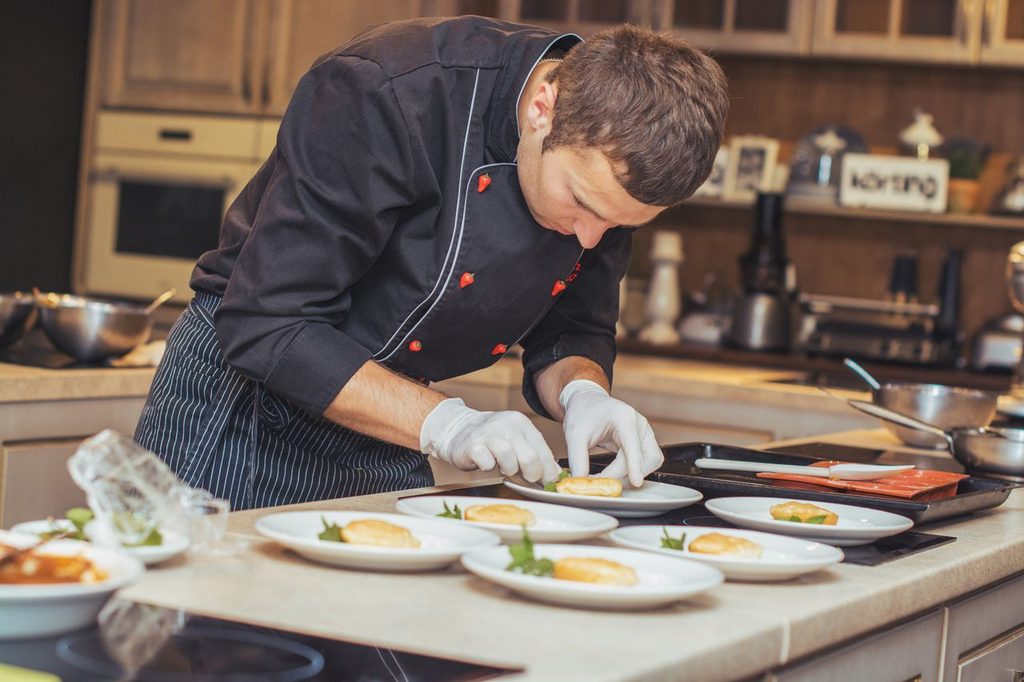
If you run a kitchen, think about how you use your equipment and the cleanliness of your storage and preparation areas. Use separate equipment for raw and ready-to-eat foods.
What makes E. coli O157 different from other food poisoning bacteria?
E. coli O157 belongs to a group known as Shiga toxin-producing E. coli (STEC), which you may also see called VTEC. “O157” is simply a label for a marker on the bacterium’s surface, which is how scientists tell it apart from other strains. What sets this group apart is the Shiga toxin it produces, which can damage the gut lining and, in some people, other organs such as the kidneys.
The most important difference is how little it takes to make someone ill. E. coli O157 has a very low infectious dose, far lower than many other food poisoning bacteria, which means a tiny amount of contamination can be enough. This is why a small amount of cross-contamination, a missed handwash or an unreported case of diarrhoea can have serious consequences.
Because so few bacteria are needed, it also spreads easily from person to person, for example, from an infected person to family members or colleagues. Some people carry it without showing any symptoms, so good hygiene matters even when nobody appears ill.
Symptoms usually start two to four days after infection, although they can appear anywhere from one to 14 days later, and most people recover within a week or so. A small number of people, mainly young children, go on to develop haemolytic uraemic syndrome (HUS), a serious condition that affects the kidneys. The risk is highest in children under five, and older adults can also be at greater risk of complications. You can read more about symptoms and when to seek medical advice on NHS inform.
The main source is animals, particularly cattle and sheep, and their surrounding environment. That is why raw meat, unwashed vegetables, unpasteurised dairy, contaminated water and contact with farm animals all appear in the list above. Thorough cooking kills bacteria, but chilling does not reliably do so, so you cannot count on the fridge to protect ready-to-eat food from contamination.
E. coli O157 is not the only Shiga toxin-producing strain. Others, such as O26 and O145, also cause illness and outbreaks in the UK, and the same hygiene and separation controls protect against all of them.
If a food handler is confirmed to have a STEC infection, they may be asked to stay away from work for longer than the usual 48 hours, sometimes until tests show they are clear. If this happens, involve your local environmental health or health protection team early.
Sue recommends: Make it easy for staff to tell you they are unwell. Because so few bacteria are needed to cause illness, one unreported case of diarrhoea at work matters far more than people expect, so build a clear, no-blame sickness reporting rule into every induction.
Check out the Food Standards Agency (FSA) E. coli O157 cross-contamination guidance.
More detail on E.coli and how to prevent it is included in our Food Safety Courses. If your team prepares or serves food, our Level 2 Food Safety for Catering course covers cross-contamination and personal hygiene in practical detail, and Envesca has helped food businesses with training like this for over 30 years.
If you have a question or enquiry about food safety, please call the team on 01452 502113 or complete our enquiry form.


Highfield Level 2 Award in Food Safety for Catering
This Level 2 Food Safety for Catering course gives you the practical knowledge you need to handle and prepare food safely, helping you understand good hygiene practices and your food safety responsibilities in a catering environment. Learn More
Highfield Level 3 Award in HACCP for Catering
This one-day Level 3 HACCP for Catering course will enable you to create a food safety management system based on the Codex HACCP principles. Learn More
Highfield Level 3 Award in Food Safety for Catering
This three-day Level 3 Food Safety for Catering course gives supervisors the practical knowledge they need to manage food safety, monitor standards and support good practice in the workplace. Learn More
Highfield Level 4 Award in Food Safety for Catering
Develop the knowledge and confidence to manage food safety effectively, control risks and maintain high standards in a catering environment. Learn More

